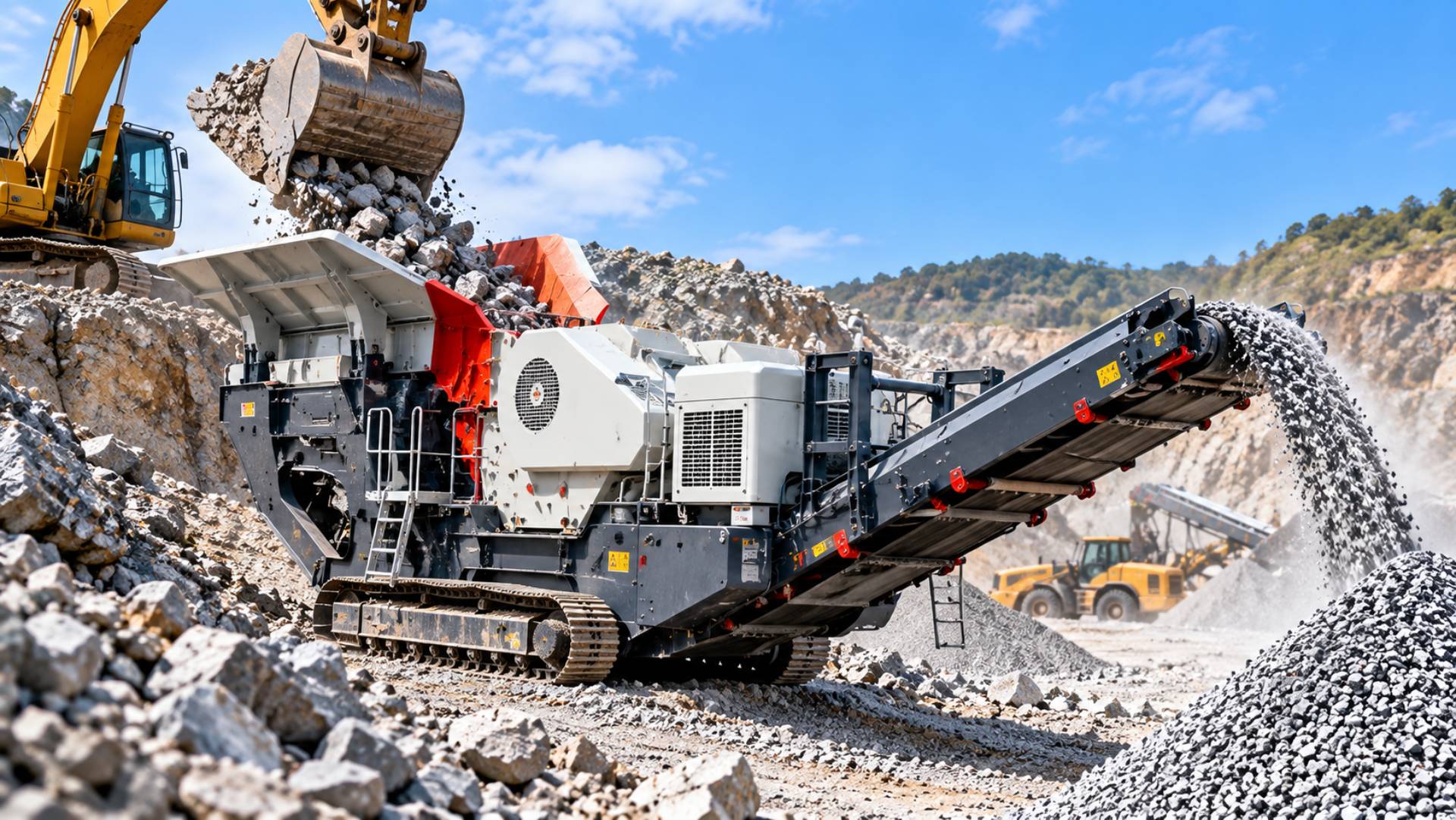
How Mobile Jaw Crushers Improve Primary Crushing on Changing Sites
Primary crushing turns large rock or recycled material into manageable sizes for further processing. On sites that shift location or face irregular ground conditions, fixed plants often prove impractical because of foundation requirements and transport logistics.
Many operators therefore turn to mobile jaw crushers. These units bring the crushing stage directly to the material source, reducing the need for long haul distances and allowing the plant to follow the work as the site develops or moves.
Why Mobility Matters in Primary Crushing
Traditional stationary jaw crushers need concrete foundations, permanent power supplies and fixed conveyor runs. Setting them up takes time and capital, and relocating them is rarely economic. Mobile versions travel on tracks or wheels and can be positioned close to the face or the stockpile.
This approach cuts the distance that uncrushed rock must travel. Fewer haul trucks are required, fuel use drops and the risk of bottlenecks on internal roads decreases. On multi-site contracts or short-term projects the same machine can finish one location and move to the next without major dismantling.
Tracked models handle uneven or soft ground well and can follow an advancing quarry face. Wheeled units suit firmer surfaces and road transport between projects. Both types typically set up with hydraulic legs and require no permanent civil works.
How Jaw Crushers Suit Primary Reduction
Jaw crushers work by compression. A fixed jaw and a moving jaw form a V-shaped chamber. Material is fed from above and is crushed as the moving jaw closes against the fixed one. The process is well suited to hard, abrasive rock and to mixed demolition material that may contain steel or other contaminants.
The wide feed opening accepts large, irregular pieces straight from the excavator or loader. Hydraulic adjustment of the closed-side setting lets operators change the product size without lengthy downtime. Many modern units also include features such as reverse crushing action to clear sticky blockages and automatic systems that protect the machine from overload.
Because the crushing action is relatively simple and robust, jaw crushers tolerate the variable feed conditions common on changing sites better than more specialised secondary machines.
Practical Advantages on Variable Sites
Several operational benefits appear when primary crushing moves with the work:
- Reduced material handling lowers fuel and tyre costs.
- Faster mobilisation means production can start sooner after arrival.
- On-site processing supports recycling of concrete and asphalt without double handling.
- Adjustable settings allow the same machine to produce different product sizes as project needs change.
- Compact footprints fit restricted urban or temporary sites.
- Lower permanent infrastructure keeps capital commitment smaller on short-life projects.
These points combine to improve overall site efficiency, especially where reserves are limited or contracts require frequent relocation.
Matching the Machine to the Application
Feed size, required throughput and site access all influence the choice of model. Larger feed openings handle coarser material but increase the machine’s weight and transport dimensions. Capacity figures vary with rock hardness, moisture content and the percentage of fines in the feed, so realistic site data is more useful than maximum rated figures.
Power source is another decision. Diesel-hydraulic units offer independence from external electricity. Electric or hybrid options reduce emissions and running costs where a reliable power supply is available. Dust suppression and noise control features help meet environmental conditions on urban or sensitive sites.
Operator access platforms, remote controls and automated monitoring systems improve safety by keeping personnel away from the crushing chamber during normal operation.
Common Challenges and How to Address Them
Changing sites often bring variable feed quality. Oversized pieces, clay contamination or high moisture can reduce throughput or cause bridging. A well-matched grizzly feeder removes fines and protects the jaw from unnecessary wear. Regular inspection of jaw plates and toggle settings maintains consistent product size.
Transport dimensions and weight limits must be checked against local road regulations before a move. Some larger units require partial disassembly or specialised trailers. Planning the sequence of moves and preparing level hard-standing at the next location shortens set-up time.
Maintenance intervals should be scheduled around production rather than postponed until a convenient break. Ready access to wear parts and trained technicians keeps availability high when the machine is the only primary crusher on site.
When Professional Advice Is Useful
Complex feed characteristics, strict environmental limits or multi-stage plant layouts benefit from experienced application engineering. A specialist can review rock tests, expected tonnages and site constraints to recommend the most suitable size and configuration. They can also advise on complementary equipment such as screens or secondary crushers that will work efficiently with the mobile jaw unit.
Final Remarks
Mobile jaw crushers improve primary crushing on changing sites by bringing the reduction stage to the material instead of hauling rock to a fixed plant. Their ability to relocate quickly, accept large feed sizes and adjust product settings makes them practical for quarries, demolition sites and short-term contracts where conditions and locations evolve.
Select a model that matches the expected feed size and throughput, plan site preparation and transport carefully, and maintain the machine according to the duty cycle. These steps deliver reliable primary reduction while keeping the operation flexible enough to follow the work.