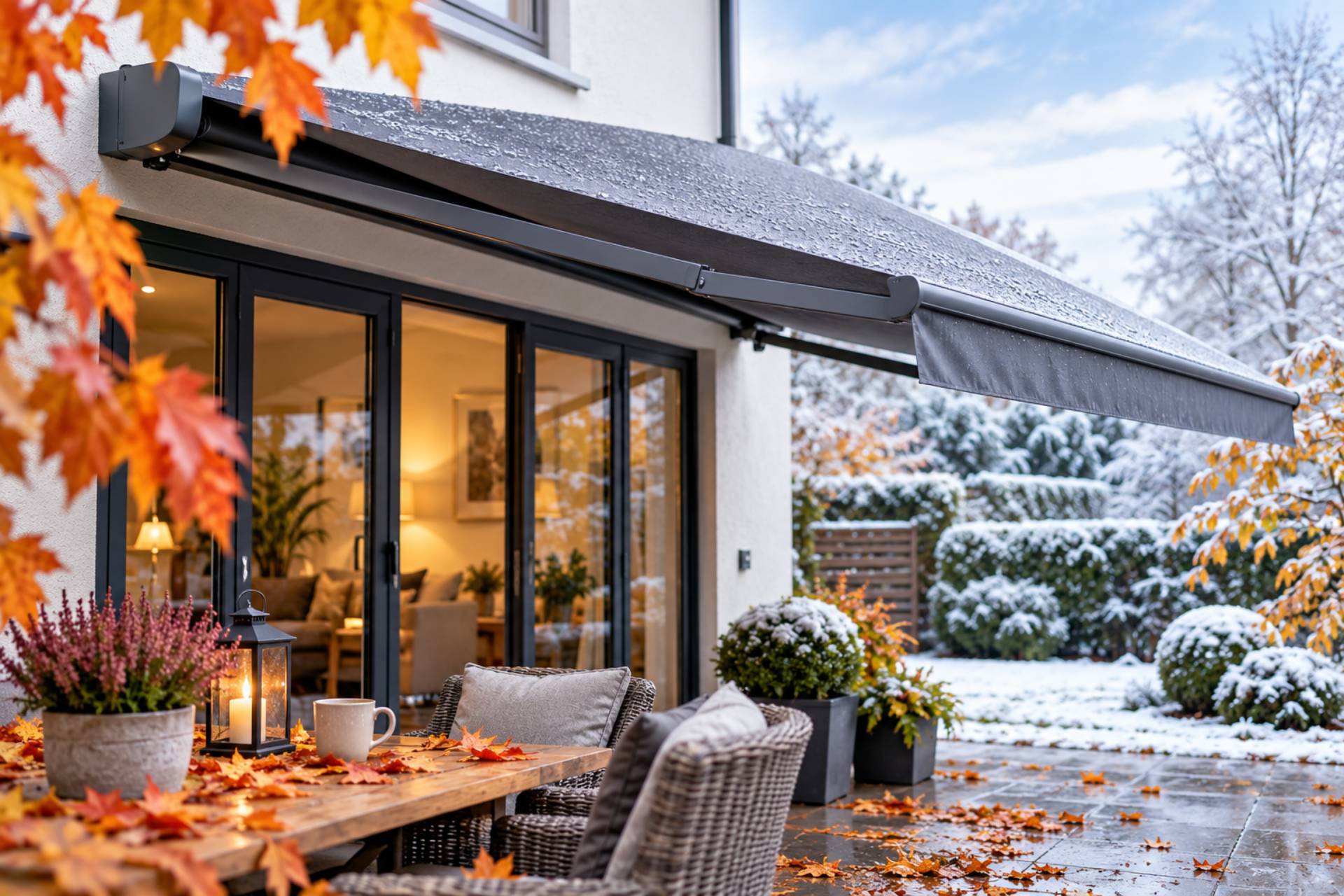
Caring for a Retractable Waterproof Awning Through Autumn and Winter
As the warmer months fade and the weather turns cooler and wetter, outdoor living spaces need a different approach. A well-maintained awning continues to offer shelter and comfort, but autumn leaves, damp air, and winter frosts place extra demands on both the fabric and the mechanism.
Looking after a retractable waterproof awning during these seasons helps protect the material, keep the arms and cassette working smoothly, and extend the overall life of the installation. With a few practical habits, most owners can keep their awning in good condition ready for spring.
Preparing the Awning for Autumn
Autumn brings falling leaves, heavier dew, and more frequent rain. These conditions can leave debris on the canopy and allow moisture to linger. The first step is a thorough clean before the colder weather sets in.
Extend the awning fully on a dry day. Use a soft brush or broom to remove loose leaves, twigs, and surface dirt from both the top and underside of the fabric. Then wash the canopy with warm water and a mild soap solution applied with a soft cloth or sponge. Avoid harsh detergents, bleach, or pressure washers, as these can damage the waterproof coating and any protective finishes. Rinse thoroughly with clean water so no soap residue remains.
Allow the fabric to dry completely before retracting it. Trapped moisture is one of the most common causes of mould and mildew during the months ahead. Once dry, inspect the seams, stitching, and edges for any small tears or wear. Addressing minor issues now prevents them from worsening under winter conditions.
Check the surrounding area as well. Clear gutters above the awning so water does not cascade onto the fabric or frame. Trim any overhanging branches that could drop further debris or rub against the canopy when the wind rises.
Looking After the Frame and Mechanism
The aluminium arms, front bar, and cassette need attention too. Wipe down the frame with a damp cloth to remove grime. Inspect all bolts, brackets, and fixings for tightness or signs of corrosion. Tighten anything that has loosened over the summer.
Moving parts benefit from a light application of silicone-based lubricant. Focus on the hinges, joints, and any sliding elements. Silicone spray does not attract dirt in the same way oil-based products can, and it helps prevent stiffness when temperatures drop. If the awning is motorised, check that the motor and any sensors still operate correctly. Clean the sensor lenses gently if present, as dirt can interfere with automatic retraction.
Winter Protection and Daily Habits
In winter the priority shifts to protection from snow, ice, and strong winds. The safest approach for most retractable models is to keep the awning fully retracted when not in use. The cassette design encloses the fabric and mechanism, shielding them from the elements far more effectively than leaving the canopy extended.
Never retract the awning while the fabric is still wet or damp. If rain or snow has left moisture on the canopy, wait for a dry spell, extend it fully, and allow it to air-dry before closing it again. Leaving damp fabric rolled up creates ideal conditions for mould.
If snow does settle on an extended canopy, remove it promptly with a soft brush. Do not use sharp tools or force the mechanism if ice has formed. Avoid walking on the fabric or applying heavy pressure. Strong winds are another risk. Retract the awning if gusts are forecast, or rely on any wind sensors fitted to the system if they are present and functioning.
For models without a full cassette, a breathable protective cover can offer extra defence against prolonged exposure. Ensure any cover allows some airflow so condensation does not build up underneath.
Practical Care Checklist for the Colder Months
A short list of regular actions makes seasonal care straightforward:
- Brush off leaves and debris after windy or stormy weather.
- Clean the fabric with mild soap and water when it looks dirty, then rinse and dry fully.
- Inspect fixings and lubricate moving parts at the start of autumn and again mid-winter if needed.
- Retract the awning during heavy rain, snow, or high winds.
- Keep the area around the wall brackets clear of ice and accumulated snow.
- Test any automatic sensors periodically to confirm they still respond.
These steps take little time yet prevent most common problems.
When to Seek Professional Help
Most routine cleaning and checks can be handled by the homeowner. However, if you notice stiff or uneven movement, unusual noises from the arms or motor, frayed seams, or any damage to the frame, it is wiser to contact a specialist. Attempting complex repairs without the right tools or knowledge can cause further issues. Professional servicing before spring is also a sensible option if the awning has seen heavy use or if you are unsure about the condition of the mechanism.
Wrapping Up
Caring for a retractable waterproof awning through autumn and winter centres on keeping the fabric clean and dry, protecting the frame from debris and moisture, and retracting the canopy during harsh weather. Regular light maintenance prevents mould, reduces wear on moving parts, and preserves the waterproof performance of the material.
By following these practical steps and addressing any concerns promptly, the awning remains ready for reliable use once milder weather returns. A little attention each season pays off in smoother operation and longer service life.